
University of Innsbruck Installs Wayland Additive’s Calibur3 System to Advance Metal 3D Printing Research
University of Innsbruck Installs Wayland Additive’s Calibur3 System to Advance Metal 3D Printing Research
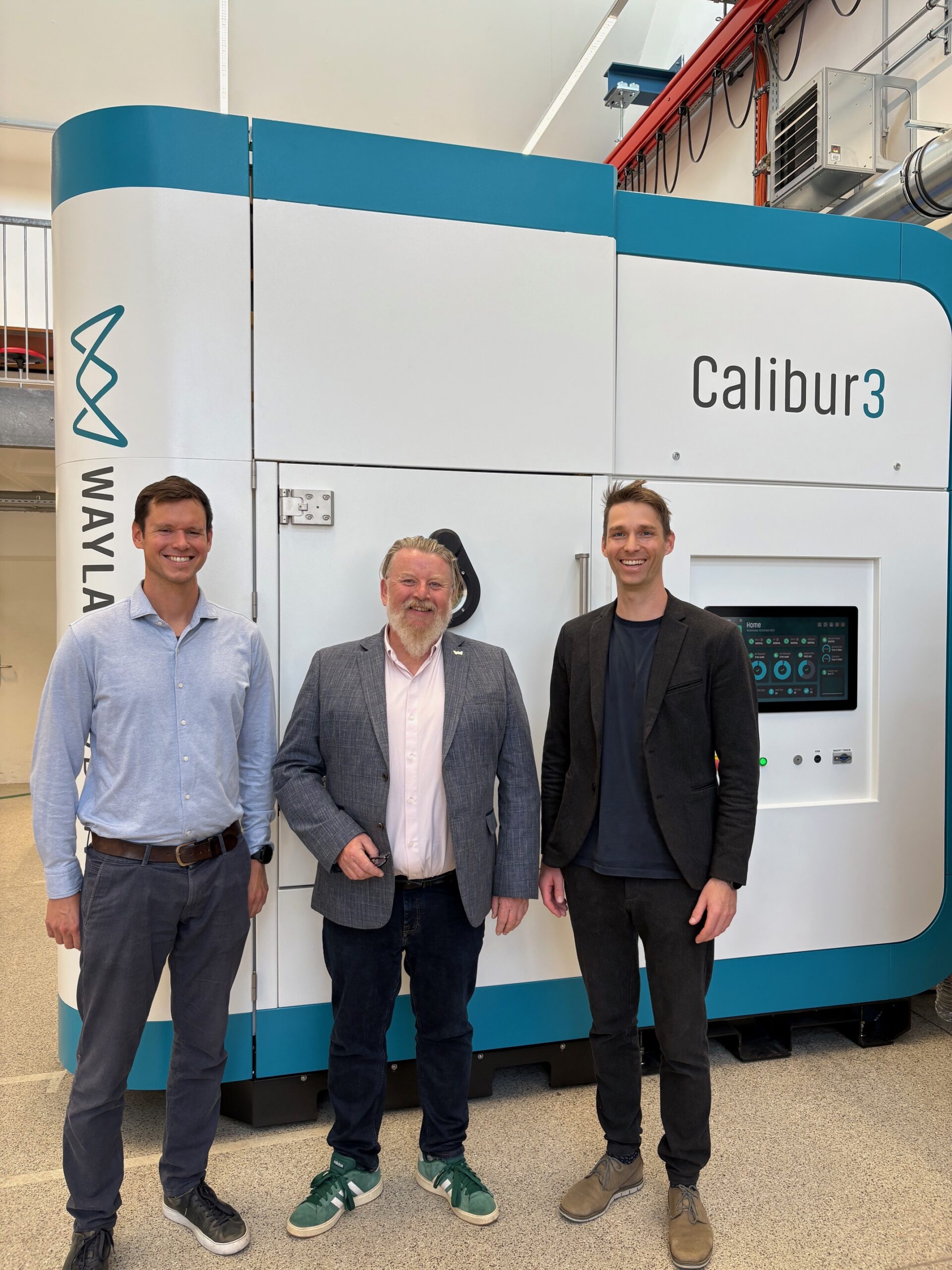
The University of Innsbruck has strengthened its advanced manufacturing and materials research capabilities with the installation of a Calibur3 electron beam (eBeam) metal additive manufacturing system developed by UK-based Wayland Additive. The new installation is located within the university’s Faculty of Engineering Sciences, Department of Mechatronics and Group for Materials Science.
The equipment will support research into advanced metal additive manufacturing processes, particularly the development and processing of challenging materials, including high-temperature alloys. The installation also marks the introduction of this new generation of powder bed fusion electron beam (PBF-EB) technology in Austria.
The acquisition reflects the university’s growing focus on developing innovative manufacturing processes and investigating the behaviour of advanced metallic materials under different processing conditions. With industries increasingly demanding high-performance components, additive manufacturing technologies are creating new opportunities to develop complex geometries, optimise material properties and improve manufacturing flexibility.
NeuBeam Technology Offers Greater Process Control
A major factor behind the university’s decision to acquire the Calibur3 system is Wayland Additive’s proprietary NeuBeam technology, which incorporates Active Charge Neutralisation.
Conventional electron beam powder bed fusion systems generally require extensive pre-sintering of the powder bed to prevent electrostatic charging. Without appropriate charge management, electrostatic forces can cause powder particles to disperse during processing, resulting in smoke events that interrupt the manufacturing process.
Wayland’s NeuBeam technology addresses this challenge by actively neutralising electrostatic charges during the build process. This approach provides researchers with greater flexibility in managing processing temperatures and exploring different material-processing conditions without relying on the conventional extensive pre-sintering approach.
According to Ass.-Prof. Dr. Lukas Zelger, coordinator of the Materials Science Group at the University of Innsbruck, the Calibur3 is the first system of this new PBF-EB generation in Austria. He highlighted its extensive process-monitoring capabilities and Active Charge Neutralisation technology as important features that will support a data-driven research approach.
The combination of these capabilities is expected to help researchers investigate new processing conditions and explore opportunities between conventional laser-based powder bed fusion (PBF-LB) and electron beam powder bed fusion technologies.
Advanced Monitoring to Support Alloy Development
The Calibur3 system also offers advanced temperature-management capabilities, flexible scanning strategies and high-speed, high-resolution thermal imaging. These features are particularly relevant to materials research, where controlling thermal conditions during manufacturing can in fluence the resulting microstructure and mechanical properties of metal components.
Dr. Jakob Braun, Senior Scientist at the University of Innsbruck, emphasised the importance of temperature-management flexibility and scanning-strategy control for the university’s research activities.
He noted that the combination of thermal imaging and process flexibility will allow researchers to investigate how different manufacturing parameters influence alloy microstructures and help identify processing conditions that deliver the desired material properties.
This capability is particularly significant for high-performance alloys, where variations in temperature, cooling behaviour and energy input can affect the final characteristics of manufactured components.
Open Architecture and Small Build Tank for Research Flexibility
Another important feature of the Calibur3 is its open architecture, which allows researchers to adjust scan strategies, beam parameters and energy input during process development.
This flexibility is valuable for research institutions working with new or specialised alloys, as different materials often require customised processing parameters. The ability to modify these parameters provides researchers with greater scope to investigate manufacturing conditions, evaluate material behaviour and develop new processing methodologies.
The University of Innsbruck has also selected the optional Small Build Tank (SBT) configuration. This feature is particularly useful when conducting experiments with expensive, specialised or limited-availability metal powders.
By reducing the quantity of powder required for individual experimental builds, the smaller build environment can help researchers conduct more iterations without maintaining large inventories of high-value materials. This can support faster experimental cycles and make early-stage alloy development more resource-efficient.
Supporting High-Performance Materials Research
The installation aligns with the Materials Science Group’s broader research activities in metal additive manufacturing. According to the university’s research profile, the group works on alloy development and process optimisation for metallic powder bed manufacturing.
Its research interests include refractory metals such as molybdenum and tungsten, titanium and aluminium alloys, and steels. The group also investigates simulation-based process development and manufacturing strategies aimed at achieving defect-free processing of new materials.
The addition of the Calibur3 system is expected to expand the group’s experimental capabilities, particularly in investigating materials that present challenges under conventional additive manufacturing conditions.
Potential research applications include the development of advanced alloys and the optimisation of manufacturing processes for components requiring specialised thermal, mechanical and structural properties. Such research is relevant to industries including aerospace, automotive, energy, engineering and other sectors that depend on high-performance metal components.
Austrian Research Funding Supports the Installation
The acquisition of the Calibur3 system was made possible through funding from the Austrian Research Promotion Agency (FFG) under its R&D Infrastructure Funding Program 2024.
The FFG supports research and technological development across Austria by helping universities, research institutions and businesses access advanced infrastructure and resources. Its R&D infrastructure initiatives are intended to strengthen the country’s research capabilities and encourage the development of new scientific and industrial technologies.
For the University of Innsbruck, the investment represents an important addition to its research infrastructure and provides an expanded platform for exploring new approaches to metal additive manufacturing.
Wayland Additive Highlights Research Collaboration
Darrin Dickinson, Head of Business Development (EMEA) at Wayland Additive, expressed the company’s satisfaction with supplying the Calibur3 system following the university’s open tender process.
He highlighted the research expertise of the Innsbruck team and noted that the installation would enable investigations into materials and processing conditions that are difficult to achieve using other technologies.
According to Dickinson, the combination of NeuBeam technology, advanced process monitoring and flexible temperature management will help researchers explore new areas of metal additive manufacturing, particularly in overcoming processing limitations associated with high-performance metal alloys.
The collaboration also reflects the growing relationship between advanced equipment manufacturers and academic research institutions in developing next-generation manufacturing technologies.
Calibur3 to Be Showcased at Formnext 2026
Representatives from Wayland Additive and the University of Innsbruck are also scheduled to attend Formnext 2026 in Frankfurt, Germany, in November.
Visitors will have the opportunity to meet the Wayland Additive team at Hall 12, Stand B139, where discussions will focus on Calibur3 applications, developments in electron beam additive manufacturing and the latest research opportunities.
The installation at the University of Innsbruck highlights the expanding role of advanced metal additive manufacturing in materials science. By combining charge-neutralisation technology, flexible process controls and advanced monitoring capabilities, the Calibur3 system provides researchers with an additional platform to investigate challenging alloys and develop new approaches to high-performance metal manufacturing.